Skip to content
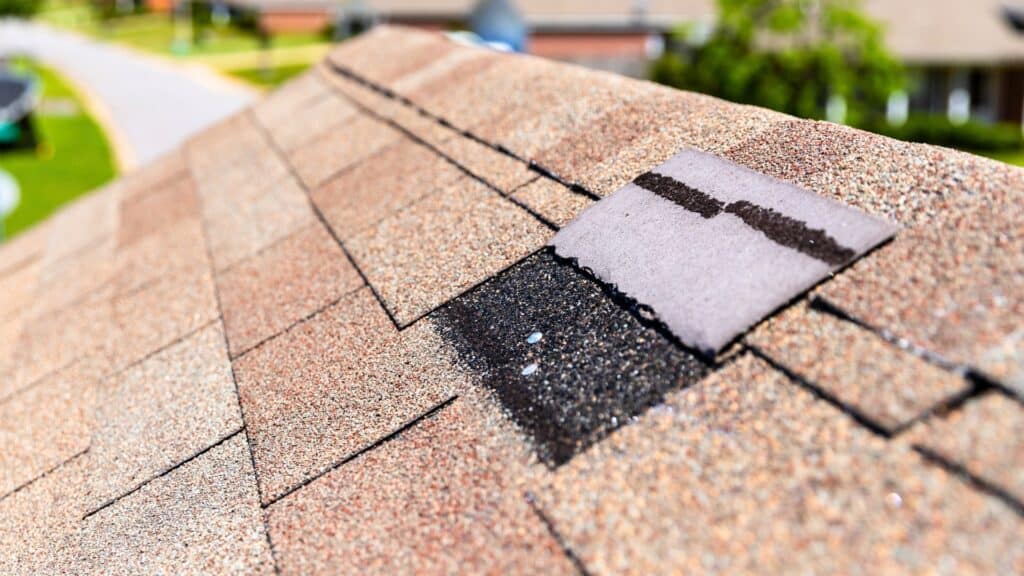
Missing shingles are one of the most recognizable signs of wind damage. And if every shingle still appears to be firmly in place after a windy night, you might assume your roof weathered the storm just fine.
But shingles don’t have to be ripped away and thrown to the ground to be damaged.
Wind can lift them just enough to break the seal underneath, bend or crease them, and leave them more vulnerable to the next round of rain or strong gusts. In some cases, these damaged shingles settle right back into place, leaving very little evidence of what happened.
How Wind Damages Shingles Without Blowing Them Off
Wind doesn’t have to send your shingles flying into the neighbor’s yard to cause damage. When strong winds whistle through, the air moving across and around your roof can create pressure that pulls upward on the shingles. The edges and corners are often especially vulnerable to this uplift.
Asphalt shingles are nailed to your roof, but they also rely on adhesive sealant strips to help bond them to the shingles below. A strong gust can lift a shingle enough to weaken or break that seal without pulling the shingle free.
In other cases, the shingle bends as it lifts and develops a crease. That physical damage can weaken the shingle and leave it more susceptible to future wind and water intrusion.
Here’s how those different types of wind damage stack up:
| Type of Damage | What Happens | Why It Matters |
| Missing shingle | Wind rips the shingle completely off your roof. | The roofing materials underneath are left exposed to rain and whatever else Ohio weather has in store. |
| Lifted or loose shingle | Wind weakens or breaks the seal, but the shingle remains attached. | The shingle may lift more easily in future storms and give wind-driven rain a path underneath. |
| Creased shingle | The shingle lifts and bends far enough to develop a crease. | The shingle itself has been physically damaged and may need to be replaced. |
Signs of Wind Damage When Your Shingles Are Still in Place
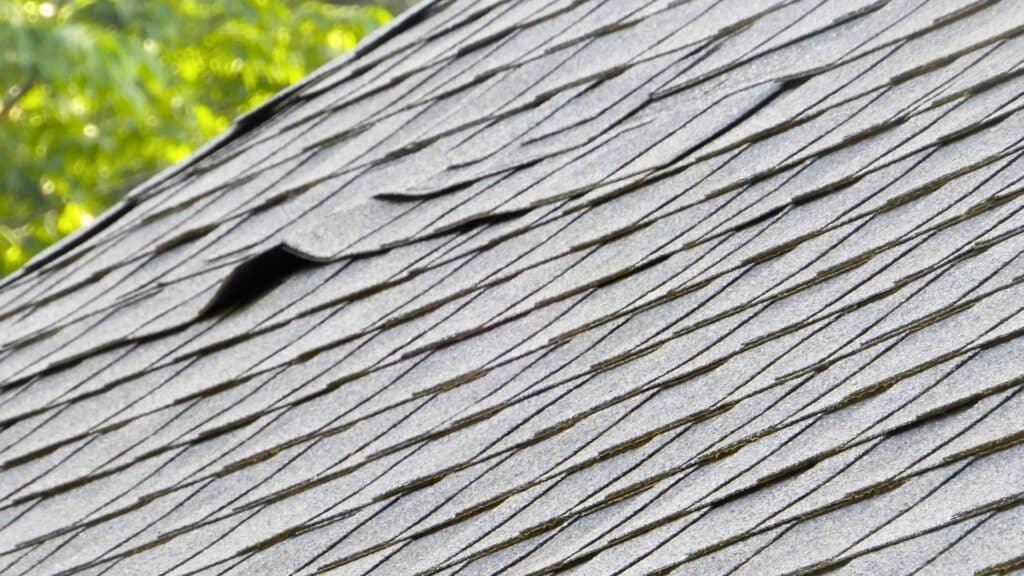
After a stretch of strong winds, take a peek at your roof for damage. There’s no need to climb up there (that’s what professionals are for); just see what you can spot from the ground. Here’s what to look for:
Lifted or Loose Shingles
Check the edges of your roof for shingles that look raised, curled, or slightly out of line with the ones around them. Winds tend to put substantial pressure on roof edges, but loose shingles can show up elsewhere on the roof, too.
A lifted shingle may settle back down once the wind stops, which can make this type of damage tough to see without getting up close.
Creases Across the Shingles
If the wind was strong enough to bend the shingles back, there might be some creased shingles up there. The shingle might fall back into place afterward, but that crease is a sign that the material itself has been damaged.
Creases can be pretty subtle, especially when you’re looking at the roof from the yard. They’re also different from normal wear or slight variations in how the shingles sit, so if you’re not sure whether you’ve got creased shingles on your hands, have a roofer take a closer look.
Broken or Weakened Shingle Seals
This is one of the trickier forms of wind damage to spot. Asphalt shingles use adhesive sealant strips to help keep them bonded to the shingles below. Wind can break that bond without leaving an obvious mark on the surface.
Once that seal is compromised, the shingle might be easier for another gust to lift and could allow wind-driven rain underneath.
Damaged Flashing, Ridge Caps, or Roof Edges
Shingles aren’t the only parts of your roof that can take a hit. If the wind did a number on the shingles, it probably affected the ridge-cap shingles, flashing around chimneys and roof penetrations, and materials along the eaves and rakes.
If damaged, those areas can let water sneak into your roofing system (even if the main field of shingles looks intact).

New Water Stains or Leaks
Sometimes, the first sign of wind damage you’ll find is in the house. New ceiling stains, damp attic insulation, or moisture around a roof penetration after a storm can indicate that wind disturbed shingles, flashing, or another part of the roof system.
Water stains and signs of an interior leak can take a little while to actually show themselves. You might not notice it during or even right after the windstorm itself. It might not be until the next good rain that you notice water is painting circles on your ceiling.
Why Some Roofs Are More Susceptible to Wind Damage
Two houses right next to each other can sustain different levels of roof damage in the same storm. How a roof does in high winds depends on:
- Roof Age and Shingle Condition: Older shingles might be more vulnerable if years of sun, rain, and temperature swings have left them brittle, curled, cracked, or poorly sealed. That existing wear can give wind an easier place to catch the shingles.
- How Well the Shingles Were Sealed: Asphalt shingles rely on adhesive sealant strips to help them stay put. If your shingles weren’t sealed properly or have lost some of that bond over the years, they might be more prone to wiggling in strong winds.
- Installation and Fastener Placement: Nail placement, the number of fasteners used, and how those fasteners were driven can affect wind resistance. If your shingles weren’t installed as the manufacturer instructed, your roof might be more susceptible to damage.
- Where the Shingles Are on the Roof: Wind doesn’t exert the same force on your entire roof. Corners, edges, ridges, and other perimeter areas can experience greater wind pressure, so damage may be concentrated in certain spots.
What Should You Do After Strong Winds?
You don’t need to — nor should you — clamber onto your roof to look for damage after a windstorm. Walking on a roof, let alone a potentially damaged roof, isn’t a good idea unless you’re a professional. Now, that doesn’t mean you can’t do anything.
Here’s what you can do to look for damage after strong winds:
- Walk around your home. Look at the roof from the ground for shingles that don’t look quite right. While you’re at it, pay attention to the ridge and roof edges, too.
- Look around the yard. Check for shingles, pieces of roofing material, or flashing that might’ve come loose during the storm.
- Check inside. Take a look at your ceilings and accessible attic areas for new water stains, damp insulation, or similar signs that moisture has worked its way inside.
- Take pictures of anything out of the ordinary. Photos can give you a record of what your roof and property looked like right after the storm, which is helpful if you end up needing to file an insurance claim.
- Have the roof inspected if you suspect damage. A roofer can get a closer look at shingles, seals, flashing, and other areas you can’t safely evaluate from the ground.

Frequently Asked Questions
A roof can leave you with a lot of question marks after a windstorm, especially when there’s no obvious damage staring back at you. Here are answers to a few common questions we get.
How much does wind damage roof repair cost?
Roof shingle repairs cost about $960 on average, with most homeowners spending somewhere between $360 and $1,750. More extensive hail, wind, and storm damage costs more, averaging right around $12,300, though costs can range from $2,600 to over $22,000. Your cost will come down to how much of the roof was damaged, the materials involved, and the type of repairs needed.
What does wind damage look like on a roof?
Wind damage can show up as loose, lifted, creased, or missing shingles. You might also spot damage around the ridge caps, flashing, or edges of the roof. Sometimes, the first clue is actually indoors, in the form of a new water stain or damp spot.
Can shingles lift in the wind and lay back down?
Yep. A strong gust can catch a shingle, lift it, and then leave it lying back in place once the wind lets up. It might look fine afterward, even though the seal underneath has broken or the shingle itself has been creased.
How can you tell if a shingle seal is broken?
This one can be tough to tell just by looking at the roof. A shingle with a broken seal may still sit flat, though a loose or easily lifted edge can be a clue. A professional roofer can get a closer look and verify whether the seal is still holding.
What wind speed can damage a roof?
There’s no universal wind speed where roof damage suddenly starts. A newer roof in good condition might do perfectly fine in strong gusts, while older, worn, or poorly sealed shingles may have a tough go of it. Shingle rating, installation, roof design, and exposure to wind can make a difference here, too.
Will a roof leak immediately after wind damage?
Not necessarily. Wind damage might not cause a leak until rain hits the roof later or another gust lifts an already-loosened shingle. So, making it through the storm without a drip from the ceiling doesn’t necessarily rule out roof damage.
Should I have my roof inspected after a windstorm if no shingles are missing?
It’s not a bad idea, especially if the winds were pretty strong or your roof is older. That way, you won’t have to wonder whether the shingles, seals, and flashing did fine in the storm. If everything checks out, you’ll know you’re good to go. If not, you catch the damage early before it has time to snowball into other problems (like water leaking through your roof).

Have Frogtown Roofing Check Your Roof After Strong Winds
You can learn quite a bit about your roof with your feet planted firmly on the ground, but there’s a limit to what you can see from the driveway. A shingle that lifted and settled back down isn’t likely to announce itself, and neither is a broken seal tucked underneath it.
That’s where we come in. Frogtown Roofing can give your roof a closer look after a windstorm and let you know if we find anything that needs attention. If it all looks good, we’ll let you know.
Contact us now to schedule a roof inspection today.
Sources & References
- Asphalt Roofing Manufacturers Association – “A Simple Guide to Understanding Your Asphalt Shingle Roofing System”
Explains the components of an asphalt shingle roofing system, including how shingles are installed and sealed to create a weather-resistant roof covering.
https://www.asphaltroofing.org/a-simple-guide-to-understanding-your-asphalt-shingle-roofing-system/ - Angi – “How Much Does It Cost to Repair Asphalt Shingles?”
Provides national cost data for asphalt shingle repairs, including average project costs, typical price ranges, costs per square foot, and factors that can affect the final repair price.
https://www.angi.com/articles/cost-to-repair-asphalt-shingles.htm - HomeAdvisor – “How Much Does It Cost to Repair Storm or Wind Damage?”
Provides national cost estimates for repairing hail, wind, and other storm damage, along with common factors that influence repair costs, such as the extent of the damage, affected area, location, and materials.
https://www.homeadvisor.com/cost/disaster-recovery/repair-storm-or-wind-damage