Skip to content

When was the last time you gave your roof a good look? Not just a passing glance as you pulled into the driveway (yep, still there), but actually checked for signs of damage?
If you’re like most homeowners, it’s probably been a minute or two. Your roof is easy to overlook when everything seems to be working fine. Meanwhile, shingles can loosen, flashing can wear out, and small leaks can develop without fanfare.
Add Ohio’s hot summers, freezing winters, and occasional severe storms to the mix, and there’s plenty of reason to check in on your roof regularly.
The good news is that you can spot quite a few warning signs without ever setting foot on a ladder. We’ve put together a roof damage inspection checklist to help you know what to look for, when to check, and when it’s time to have a professional take a closer look.
When Should Ohio Homeowners Inspect Their Roofs?
You don’t need to wait until there’s a leak to check your roof. A quick visual inspection a few times throughout the year can help you spot signs of a problem before it snowballs into something bigger.
Here are a few times when you should take a look:
- In Early Spring: Look for damage left behind by winter weather, including loose shingles, damaged flashing, and signs of ice dams.
- After Severe Storms: Strong winds, hail, and falling branches can damage roofing materials, even if you don’t notice a big ol’ leak right away.
- In the Fall: Look for shingles that look worse for wear, clogged gutters, and anything else that doesn’t look quite right that could cause trouble once freezing temperatures arrive.
- When Something Seems Off: New ceiling stains, shingle granules piling up by your downspouts, or chunks of roofing material in the yard are all reasons to investigate.
Your Roof Damage Inspection Checklist: What to Look For
You don’t need to be a roofing expert to tell that something looks off. Here’s what to keep an eye out for as you check around your home:
A quick safety reminder: Stay off the roof, and don’t use a ladder to get a better view. If something looks suspicious but you can’t see it clearly, leave the closer inspection to a professional.
- Check for Missing, Cracked, or Curling Shingles
Start with the shingles. They’re your roof’s first line of defense against the rain, snow, and whatever else Mother Nature hurls its way. Their condition can tell you quite a bit about how your roof is holding up.
Look for:
- Missing shingles or bare patches on the roof
- Shingles with curled, lifted, or cracked edges
- Uneven sections that look different from the surrounding shingles
- Loose shingles or roofing fragments in your yard
A few damaged shingles don’t mean you need to start from scratch with a new roof, but they’re worth having checked out before water sneaks underneath.
- Look for Signs of Hail Damage
Hail as small as one inch in diameter can damage your roof, depending on its age and condition. If you’ve had a recent hailstorm in your area, check your roof.
Hail damage can be tough to spot, especially from the ground. There are times when the damage is pretty obvious, such as when there are noticeable marks peppering your roof. But sometimes, the hail just strips away some of the granules (which is hard to see without getting close).
So, in lieu of climbing up there, walk around your home and look for:
- Dents in gutters, downspouts, or metal flashing
- Shingles with visible dark spots or missing granules
- Cracked or broken roofing materials
- Damage to nearby siding or other exterior surfaces
- Inspect Gutters and Downspouts
Your gutters and downspouts can offer a few clues about what’s happening up on the roof. They’re also responsible for whisking water away from your house, so it’s important to keep them in good shape.
Look for:
- Gutters that are sagging, loose, or pulling away
- Shingle granules collecting near downspout outlets
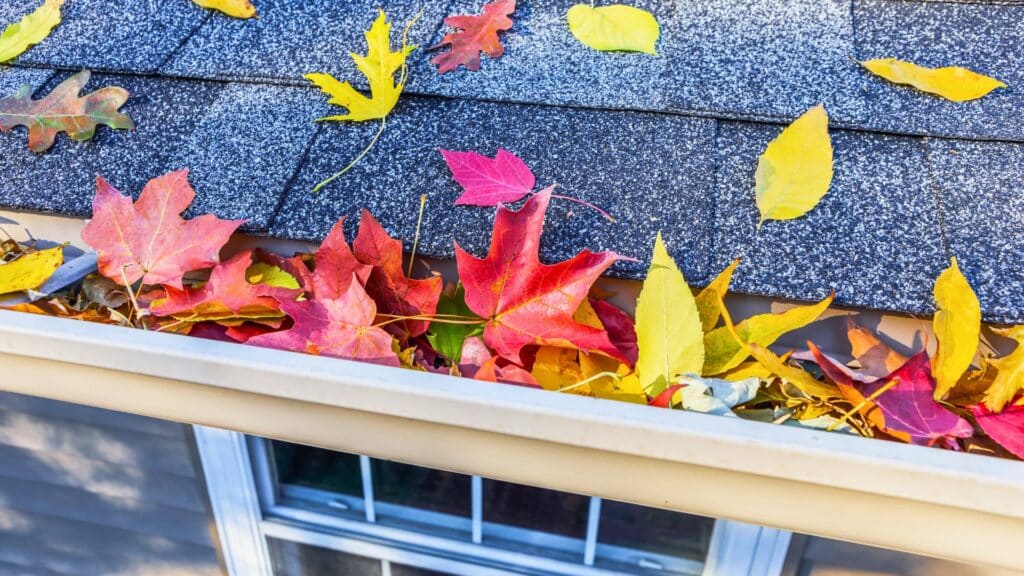
- Leaves, twigs, or other debris blocking drainage
- Water stains or signs of overflowing gutters
A little granule loss is pretty normal as asphalt shingles age. Large amounts, especially alongside visible shingle deterioration, may indicate that the roof needs attention.
- Look for Damaged Flashing and Roof Penetrations
Flashing is the thin metal material used to help keep water out around chimneys, vents, skylights, and other areas where the roof meets another surface.
From the ground, look for:
- Metal flashing that appears bent, loose, or displaced
- Visible gaps around chimneys or roof vents
- Cracked or deteriorating seals around roof penetrations
- Rust or other noticeable deterioration
Even small openings can let water seep in where it’s not supposed to, so if you notice something, have a roofer come take a look.
- Check for Sagging or Uneven Rooflines
Take a few steps back and look at the overall shape of your roof. The roofline should appear reasonably straight, without noticeable dips or sections that seem to be sinking.
Watch for:
- Sagging along the ridge or edges of the roof
- Sections that appear sunken or uneven
- Changes in the roof’s shape since your last inspection
A sagging roof can point to problems with the underlying structure, moisture damage, or excessive weight. If you notice a new or worsening sag, get it checked out as soon as possible.
- Inspect Your Attic and Ceilings for Water Damage
Some of the clearest signs of roof trouble show up inside your home. If you have a safely accessible attic, take a look around for moisture or staining. Check the ceilings and upper walls in your living spaces, too.
Keep an eye out for:
- Brown or yellow water stains on ceilings
- Damp insulation or discolored roof decking
- Peeling or bubbling paint near the ceiling
- Musty odors or visible mold growth
- Daylight coming through unexpected gaps in the roof
If you see moisture or water damage, don’t assume the problem is limited to the visible stain. Have a roofer trace the source and figure out what needs repairing.

What to Do If You Find Roof Damage
So, you’ve spotted a few shingles that look rather tired, or maybe there’s a questionable water stain marring your ceiling. What now?
What you should do next depends on how serious the damage appears to be, but here’s a good place to start:
- Document what you’ve found. Take pictures of any visible damage from a safe spot and jot down when you first noticed it. If a recent storm might be the culprit, write down when it happened.
- Prevent further water damage. If water is sneaking inside, move belongings out of the affected area and use a bucket to catch drips. Avoid wet electrical fixtures and any areas where the ceiling looks to be unstable.
- Schedule a professional roof inspection. A roofer can get a closer look at the damaged areas and help you figure out what the next steps are.
- Review your repair options. A few damaged shingles might only require a relatively simple repair. More widespread deterioration or structural damage could call for more extensive work.
- Contact your insurance company if appropriate. If the damage is the result of wind, hail, or another potentially covered event, take a peek at your policy and ask your insurer about the claims process. Unfortunately, ordinary wear and aging usually aren’t covered.
Roof Damage Inspections for Ohio Homeowners: FAQ
Roof damage can leave you with lots of questions, especially if you’re trying to figure out how serious a problem might be. We’ve answered some of the ones we hear most often below.
How often should you inspect your roof in Ohio?
Twice a year is a good rule of thumb for Ohio homeowners. Take a walk around the house in the spring to see how it held up over winter and in the fall before snow and freezing temps roll in. After rough storms, it’s a good idea to take a look then, too.
Can you inspect your roof without climbing onto it?
Absolutely! In fact, that’s how we’d recommend doing your own visual checks. You can spot missing shingles, damaged gutters, and similar obvious problems from the ground, especially with a pair of binoculars. Leave the climbing to someone with the right equipment and training.
How can you tell if your roof has hidden storm damage?
Storm damage can be tricky. Your roof might look perfectly fine from the driveway, even if a storm has damaged the shingles or flashing. Dented gutters, loose roofing material, and excessive granules near your downspouts can offer some clues. If you think there’s damage, have a professional inspection done.
How much does a professional roof inspection cost in Ohio?
That depends on the roofing company and what’s involved in the inspection, but it usually falls right around $260. Some contractors charge based on the roof’s size, complexity, or other type of assessment needed. We offer free roofing inspections so you can get a better feel for what’s going on and if any repairs are necessary.
Does homeowners insurance cover roof damage in Ohio?
It can, depending on what caused the damage. Ohio homeowners insurance policies often cover sudden damage from events like windstorms and hail. Ordinary wear, aging shingles, and problems caused by neglected maintenance are generally excluded. Your specific policy determines what’s covered, so it’s best to check with your insurer before assuming a repair will be paid for.
Should you get your roof inspected after every major storm?
Not necessarily. But if you get something like large hail, pretty strong winds, or falling branches, it’s a good idea to have the roof professionally inspected.
How do you know if roof damage requires repairs or a full replacement?
A handful of missing shingles usually doesn’t call for tearing off the entire roof. Widespread damage, recurring leaks, or shingles that are already nearing the end of their lifespan can make a replacement the more practical choice. It really comes down to how much damage there is, the condition of the roof, and what it would take to fix it properly.
Have Concerns About Your Roof? Give Frogtown Roofing a Call
There’s only so much you can tell about your roof from the driveway. Missing shingles and a big ol’ branch on your roof are easy enough to see from the ground, but smaller problems can go unnoticed until they start causing trouble.
That’s where we come in. Frogtown Roofing offers free inspections throughout Toledo and Northwest Ohio. We’ll take a closer look and show you what we find. If repairs are needed, we’ll let you know, and if not, we’ll let you know that, too.

Contact us today to schedule your free roof inspection.
Sources & References
- Allstate – “Does Homeowners Insurance Cover Roof Repairs?”
Explains how homeowners insurance may apply to roof repairs and leaks, including the role of covered events and policy exclusions.
https://www.allstate.com/resources/home-insurance/roof-leaks-cover-damage - Angi – “How Much Does a Roof Inspection Cost? [2026 Data]”
Breaks down average roof inspection costs, including differences based on roof size, accessibility, and inspection type. It also discusses inspection frequency, additional services, and the benefits of professional assessments.
https://www.angi.com/articles/how-much-does-roof-inspection-cost.htm - InterNACHI – “Hail Damage, Part 3”
An educational resource on identifying and evaluating hail damage to roofing materials based on factors like impact energy and size.
https://www.nachi.org/hail-damage-part3-30.htm - Ohio Department of Insurance – “Roof Insurance: Repair or Replacement”
Provides Ohio-specific information about roof insurance claims, repair and replacement considerations, and homeowners insurance coverage.
https://insurance.ohio.gov/consumers/homeowner/roof-insurance-repair-replacement