Skip to content
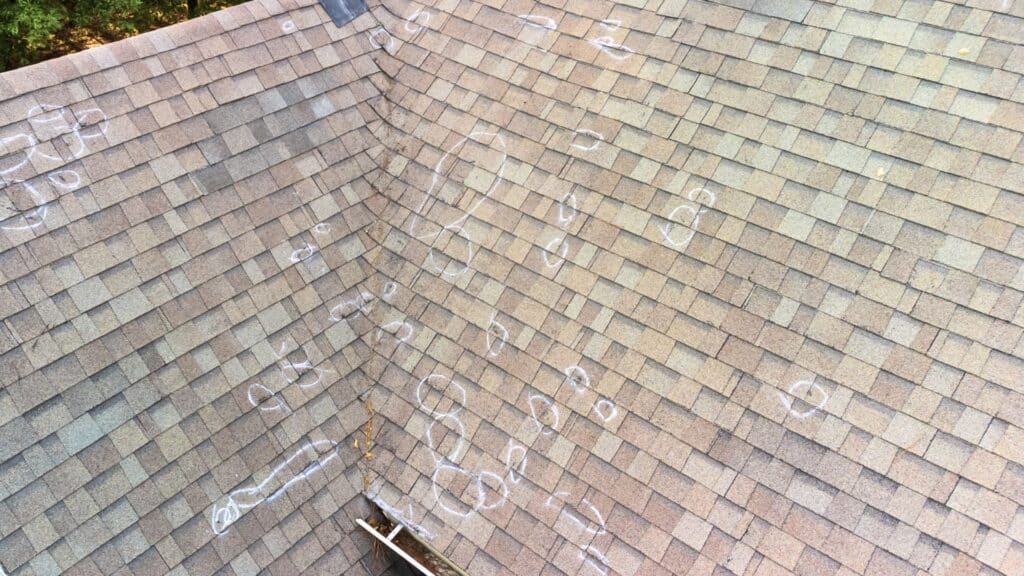
One of Toledo’s rip-roarin’ summer thunderstorms can put a roof through a lot in a surprisingly short period of time. Hard rain pummels the shingles, gusts catch the edges, branches crash onto your roof, and hail leaves dings and dents before the storm moves on.
The tricky part is figuring out what happened up there afterward.
A few shingles in the yard or a tree branch poking out of your roof make the answer pretty obvious. But sometimes, it’s not that clear.
Maybe there are a few granules collecting near a downspout, a gutter that suddenly looks beat up, or a water spot on the ceiling that wasn’t there yesterday.
Fortunately, your roof can tell you quite a bit without requiring you to dust off your climbing skills. There are clues around the outside of the house and a few places indoors that are worth checking after a rough storm.
Signs of Storm Damage You Can See From the Ground

Keep your feet firmly planted on the ground when checking for storm damage. There’s plenty you can spot from a safe distance, and anything that requires climbing onto the roof is better left to the pros.
But here are a few things you can look for:
Missing Shingles
A bare patch on the roof is one of the easier storm problems to spot. Strong winds can pull those shingles loose or even tear them off completely, sometimes sending them into the yard or leaving pieces scattered around the property.
Even one missing shingle leaves part of your roof with less protection from rain. If you find a shingle or two on the ground after a storm, take a look at the roof from the ground to see if you can spot where they came from.
Lifted or Creased Shingles
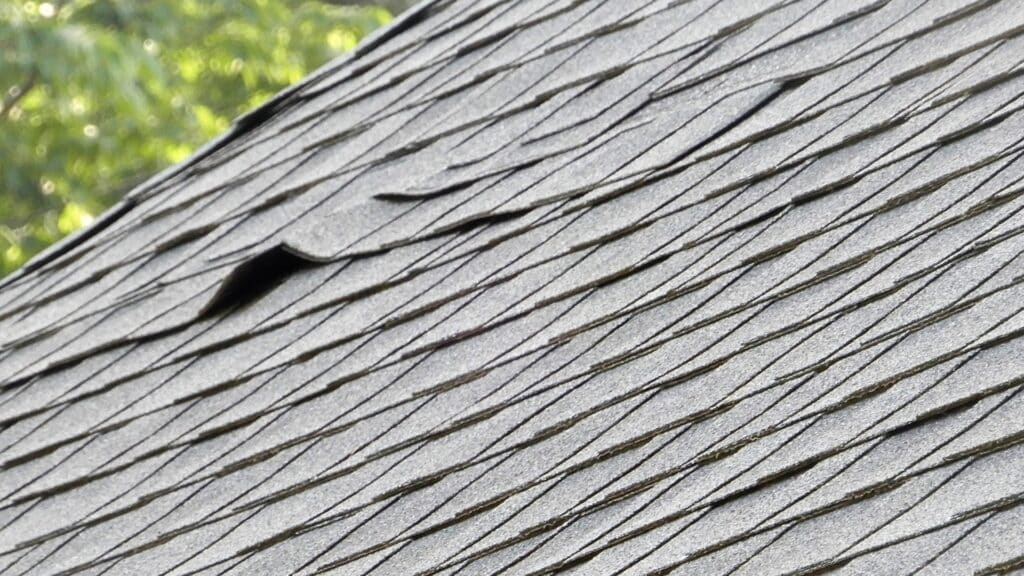
Shingles don’t have to come off the roof to be damaged by the wind. A strong gust can lift a shingle and bend it backward, leaving a crease across its surface. It might settle right back into place afterward and look pretty normal from below.
But the problem is that creased and lifted shingles may no longer seal properly, making them more vulnerable the next time wind or heavy rain moves through Toledo.
This type of damage can be hard to confirm from the ground, so if you find other signs of damage, it’s a good idea to book a professional roof inspection.
Shingle Granules Around Your Downspouts
Take a look at the ground where your downspouts empty. If you see a noticeable pile of coarse, sand-like granules after a storm, they might’ve been knocked loose from your shingles.
Asphalt shingles naturally shed some granules as they age, so finding a few isn’t unusual. But if you find a bunch after a storm, especially alongside other signs of damage, your roof deserves a closer look.
Dented Gutters and Downspouts
Hail doesn’t discriminate. It’ll wail on your metal gutters and downspouts, too. Those areas can pick up small dings and dents where hailstones struck, and if the hail was big enough, you might even find bent portions.
Those kinds of damage are useful clues. If the hail hit hard enough to leave marks on metal around your house, there’s a good chance your shingles took a hit, too.
Fallen Branches or Debris on the Roof
Branches, limbs, and other debris can make their way onto your roof during high winds. A large branch stretched across your roof is hard to miss, but smaller impacts can cause damage, too.
Cracked shingles, damaged flashing, or punctured roof materials aren’t as dramatic as a tree branch strewn across your roof or leaning inside your window, but they still compromise your roof’s ability to do its job.
If you spot a branch, don’t climb up there to remove anything yourself. A branch resting on the roof can hide damage beneath it, and wet roofing materials are especially risky to walk on after a storm.
Signs of Storm Damage Inside Your Home

Not every roofing problem is visible from the yard. After a heavy rain, take a quick spin around your upstairs and through the attic, if it’s safe to do so. You might find signs that water has made its way past the roof:
New Water Stains on the Ceiling or Walls
A new yellowish or brown spot on the ceiling is hard to ignore, especially if it shows up right after a storm. You may also notice damp drywall, peeling paint, or discoloration near the tops of the walls.
The spot where water appears inside isn’t necessarily right below the damaged part of the roof. Water will often cruise along decking, rafters, and other materials before finally making its presence known inside.
Damp Insulation or Roof Decking
If your attic is safely accessible, look for insulation that appears wet, compressed, or darker than the surrounding material. Damp spots or staining on the underside of the roof decking can point to water sneaking through somewhere.
A musty smell can be another clue, especially if you don’t spend much time in the attic and aren’t sure what the insulation or decking normally looks like.
Active Drips or Leaks
A bucket on the floor is a pretty clear sign that something needs attention. Even a few drips every minute mean water has already made its way through the roofing system and into your house.
If you find a leak, move belongings away from the affected area and pop a bucket under the leak if you can do so safely. Active leaking after a thunderstorm calls for prompt roof repair, since another bout of rain could send more water through that same opening.
Can Your Roof Be Damaged Even If It Looks Fine?
It sure can. Storm damage can be surprisingly subtle, especially when the shingles are still dutifully sitting in their spots.
Wind can loosen the seal between shingles without tearing them away, and hail can bruise or crack the material without leaving an obvious mark you can see from the ground. Flashing around chimneys, vents, and other roof penetrations can also shift or pull loose during a storm.
If everything looks fine from the driveway but the storm was a doozy, a professional inspection can give you a better idea of how your roof actually fared.
When Does Storm Damage Need Immediate Attention?
A few missing granules and water actively dripping through the ceiling are very different problems. Any suspected storm damage is worth having checked, but if you’re noticing any of these, call us right away to book an inspection:
- Water actively leaking through the ceiling, walls, or attic
- Large sections of shingles missing from the roof
- A tree or large branch on the roof
- Sagging or dipping areas that weren’t there before the storm
- Water leaking near ceiling lights or other electrical fixtures
What to Do If You Find Storm Damage
Finding storm damage doesn’t mean you should clamber onto the roof and attempt a DIY fix. Instead, here’s what you should do while you wait on an inspection:
- Take photos of what you can see. Snap pictures of missing shingles, damaged gutters, fallen branches, interior water stains, and other visible problems from a safe location.
- Protect the inside of your home. Move furniture and other belongings away from leaks, and catch dripping water with buckets.
- Schedule a professional roof inspection. Our roofers can check your full roofing system to figure out what kind of damage you’re dealing with.
- Keep records of the damage and repairs. Save pictures, inspection findings, receipts, and other documentation in case you need them for an insurance claim.
- Contact your insurance company if needed. If the damage might be covered by your homeowners’ insurance policy, check with your insurer on how to file a claim and submit necessary documentation.
Frequently Asked Questions
Once you’ve spotted something suspicious, the next questions are usually about timing, cost, and what happens next. We’ve answered a few of the most common ones we get below.
How much does it cost to repair storm damage to a roof?
Storm damage repairs depend entirely on the type and extent of damage. Hail damage, for example, usually costs between $150 and $12,500. The size of that range stems from how different repairs can be.
Before we start repairs, we always provide a detailed estimate so you know what to expect.
Does homeowners’ insurance cover roof storm damage?
Wind and hail damage are often covered by homeowners’ insurance, but your policy will tell you what’s actually covered and how much you’ll pay out of pocket. Your deductible matters, and insurers may also consider factors such as the roof’s age and condition when handling a claim.
How soon after a storm should I have my roof inspected?
If shingles are missing, water is coming inside, or a branch landed on the roof, don’t put off the inspection.
Even without obvious damage, it can be worth having the roof checked after a particularly rough storm, especially if you’re seeing damaged trees, siding, gutters, or neighboring roof damage.
Can hail damage a roof without causing a leak?
Yes, it can. A hailstone can knock away granules or damage a shingle without immediately opening a path for water. You could make it through a storm without a single drip indoors and still have roof damage that needs fixing.
Should I get on my roof to check for storm damage?
Nope. There’s no reason to risk a fall trying to get a better look, especially when your roof may be wet, damaged, or covered in loose debris. Check what you can from the ground and inside the house, then let our roofers handle the rooftop inspection.
What does wind damage look like on a roof?
Missing shingles are the obvious giveaway, but damage can be more subtle. Shingles may also lift, curl, tear, or crease, and you may find pieces of roofing material around the yard after the storm.
Can I wait to repair storm damage if my roof isn’t leaking?
A lack of leaks doesn’t necessarily mean the damage can sit for months. Lifted shingles, damaged flashing, and hail-damaged shingles may still be keeping water out for now, but they can leave the roof more vulnerable during the next storm. Have the damage inspected so you know what you’re dealing with before deciding how quickly it needs to be repaired.
Have Frogtown Roofing Plus Check Your Roof After the Storm
If the last Toledo thunderstorm did a number on your roof, Frogtown Roofing Plus can help.

We’ll take a closer look to determine the extent of the damage, explain what we find, and make the repairs needed to get your roof back in shape. If the damage leads to an insurance claim, we can help you with that, too.
Contact us today to schedule your storm damage inspection.
Sources & References
- Angi – “How Much Does It Cost to Repair Roof Hail Damage?”
Breaks down typical hail-damage roof repair costs and explains how the extent of the damage, roofing material, labor, and necessary repairs can affect the final price.
https://www.angi.com/articles/how-much-repair-roof-hail-damage-cost.htm - Ohio Committee for Severe Weather Awareness – “Weather Terms”
Defines common severe-weather terminology, including thunderstorm watches and warnings, tornado watches and warnings, and other terms Ohio residents may encounter during severe weather.
https://weathersafety.ohio.gov/weather-safety/spring-and-summer-safety/weather-terms - Progressive – “Does Home Insurance Cover Roof Damage?”
Explains how homeowners insurance may cover roof damage caused by sudden events such as wind, hail, and fallen trees, along with factors that can affect coverage and claims.
https://www.progressive.com/answers/does-home-insurance-cover-roof-damage